Sunday, October 26, 2008

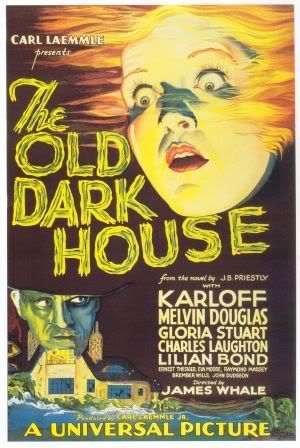
The Old Dark House (1932, James Whale)


I recently wrote a mock review of Ben Stiller's "Tropic Thunder" (a film I did not like) in which I facetiously said that "I have just seen a movie that's so awesome it raises awesomeness to a whole new level then proceeds to be so awesome that it raises awesomeness from that new level to another new level of awesomeness and proceeds to do this until I found myself in awesome heaven.".

I never thought I'd use that in an actual review, but it fits this comedy/horror masterpiece from James Whale too well for me to miss the opportunity. "The Old Dark House" is perhaps the one film which I can watch over and over and over again and not tire of, the one film which suits all my moods, and it is a film which hits the right notes for 72 minutes and doesn't miss a beat. It's perfect. Absolutely perfect at doing what it wants to do.

The plot (based on J.B. Priestley's debut novel "Benighted) has a cast of diverse and quirky characters descend on a very creepy, very old, very dark house in order to escape the storm raging outside. Inside they meet the family that occupies the house and many laughs and scares follow. That's all you should know before seeing this, because it's too much fun when you learn of the house's secret.

Not only are these characters brilliant, but the cast is an absolute dream! You're saying I can watch Ernest Thesinger, Charles Laughton, Melvyn Douglas, AND Boris Karloff in the same movie? Not just any movie, either, but a James Whale 'old dark house' movie? My life is complete. I've always loved this movie, but I've tried pretending it's not a truly great film for too long. It is! It's a masterpiece from start to finish, a brilliant comedy of manners, an atmospheric and spooky tribute to the 'old dark house' genre (of which "The Bat Whispers" is another favorite), and a film that is so expertly photographed by Arthur Edeson ("The Maltese Falcon", "Casablanca", that is so brilliantly directed by the legendary James Whale, that is such a riot throughout that I find it hard to believe that anyone could possibly dislike this film.

Expect a pure horror film and you might be disappointed. I expect that is the reason this isn't as popular as some other Universal horror features. "The Old Dark House" is, to me at least, the best film of the lot, and is just such an uproariously hilarious comedy and such a brilliantly self-referential tribute to the genre that I simply must count it as one of precious few films that I consider perfect. A real favorite, and boy is Ernest Thesinger beyond brilliant here or what?

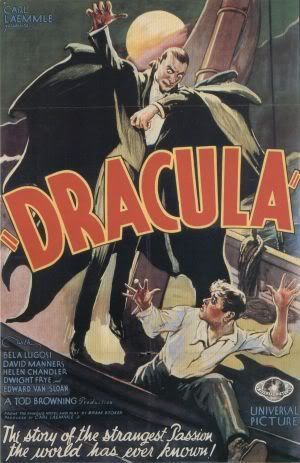
Dracula (1931, Tod Browning)


I am a fan of the Dracula story and mythology, find Stoker's "Dracula" a memorable and eerie work, and directed and wrote stage productions based on the Hamilton Deane play from the 1920's (altered by Balderston for the 1927 New York run, in which Lugosi first played Dracula) in high school and university, and as you may have already guessed I have few if any issues with the script for the film (it is certainly not in any way faithful to Stoker's novel outside of the very basic plot, however, but that does not affect its quality in my opinion).

What makes "Dracula" a mildly interesting diversion as opposed to the classic it could have become is Browning's awkward and stiff direction in his second talkie. I enjoy many films by Browning and "West of Zanzibar" is nearly a masterpiece, but his work here is transparent and uninspired. Simply comparing this film to the Spanish-language proves how flat it is and how much it lacks cohesion due to the terrible editing. George Melford's direction in the Spanish-language version, shot on the same sets and released in the same year, is so superior to Browning's work that you begin to wonder why Universal didn't switch directors once they saw footage Browning shot.

What the Spanish-language version doesn't feature, however, is Bela Lugosi. It does star Carlos Villar as Conde Drácula, though, and the less said about that monstrosity of a performance the better. Lugosi is still quite possibly the definitive Dracula, and so many moments here capture him in all his glory. "Dracula" is worth seeing not simply because it is a film with an important legacy but merely for Lugosi's take on the Count. He really is superb here. Dwight Frye's Renfield is also excellent.

"Dracula" is far from a perfect film. It's also pretty far from being the sort of classic many claim it is. It really is nothing more than a middling, average filming of a great play with a great lead performance. Thankfully the script and acting save this film from the inexplicable ineptitude of Browning's work here, and the sheer lack of cohesion in the flow of the film.


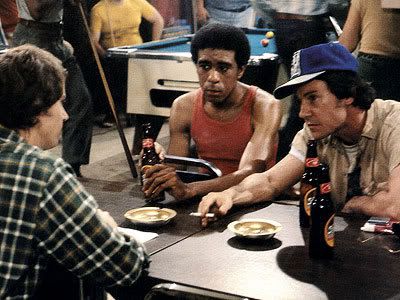
Blue Collar (1978, Paul Schrader)

"Blue Collar" opens with a masterful title sequence which introduces us, quickly and effectively, to the harsh world our characters reside in and to the nature of the conditions in the factory they work in. The opening sequence is set to Jack Nitzsche's "Hard Workin' Man", introducing blues music to us right off the bat, music that not only makes up basically all of the music in this film but can be seen as a motif or even a character in the film.

It's amazing how confident and mature Paul Schrader is as a director at this point. Of course, Schrader had already written the massively acclaimed "Taxi Driver" by 1978, but contrary to what one might expect it's his confident and sure handling of the pace and mood in "Blue Collar" that is truly the highlight of the film, not the screenplay penned by Paul and Leonard Schrader, granted the screenplay is in itself quite terrific. Schrader is already a mature director who understands the rhythm of a film.

Going back to the use of music in this film, it isn't so much the score itself by Jack Nitzsche (which is, don't get me wrong, solid blues) that's impressive, it's Schrader's handling of the music and sound in general in this film that makes it work so well. First off, the choice to go with a blues score is inspired in itself, as the nature of the music so perfectly captures what these characters are going through. In addition, the score is most noticeable during scenes where the film appears to be commenting on the futility of the characters' struggle and the misery of what they're going through. Where many films would use music to 'enhance' big, dramatic scenes, Schrader's "Blue Collar" makes the wise decision to use it during low-key scenes. There are several scenes that don't feature any music at all, these being some of the more important scenes. Note the scene where Smokey gets trapped in the paint room, absolutely no music, just the cold sound of the machinery (expertly mixed, might I add), which is far creepier and more effective than any score could be at that point. Similar use of sound occurs a few minutes before the end when Harvey Keitel's character Jerry is being chased.

The acting here is uniformly superb with Keitel possibly giving his best performance (or at least one of them), and Richard Pryor offering what must be recognized as one of the finest performances of the 70's by anyone. Really, who knew Pryor had this sort of skill when it comes to dramatic acting? Yapphet Koto, a beloved character actor, does a fine job in rounding out the cast for the main three characters. Again, Schrader must be credited for directing his actors so well. It's well-known, of course, that the three leads hated each other and actually broke out in fistfights between takes on occasion. Perhaps that created a sort of demented chemistry between them.

The screenplay by Schrader and Schrader (Paul and Leonard) is a fine, fine piece of writing, sort of the daytime factory-worker version of the crude-yet-poetic "Taxi Driver" screenplay. Oddly enough, it's also the source of the few major flaws in this film, as it can come across as fairly heavy-handed in certain scenes. If there's one thing I'd definitely do differently with this film, it's the final shot, which would have been terrific had this been a comedy.

All in all, a great film in its own right and especially impressive as a directorial debut from Schrader. Very memorable.

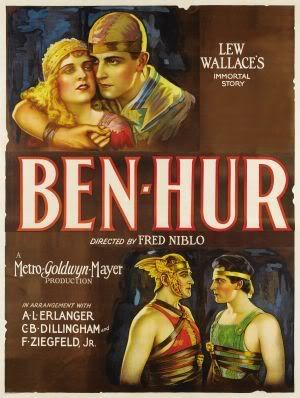
Ben-Hur: A Tale of The Christ (1925, Fred Niblo)

This much lesser-known version of the Ben-Hur story from 1925 was the most expensive silent film ever made and benefits greatly from MGM's ability at the time to make films that looked amazingly grand and epic and still somehow manage to today. Even after seeing William Wyler's 1959 version and even with the advancements of modern CGI, the 83 year old "Ben-Hur: A Tale of the Christ" still looks unbelievably impressive with its massive sets and thousands of extras.

The mythos that has surrounded "Ben-Hur: A Tale of the Christ" among film buffs over the years has reached a status almost as grand as the film itself. The deaths, bribes, and other stories surrounding the movie and in particular the famous chariot race sequence do nothing to detract from the film (although they do distract one from it) but instead increase one's fascination with the production. I'm not sure if there are any comprehensive books written on the film but I must seek one out eventually.

The story doesn't need to be discussed because everyone knows it. It's an entertaining story that's really quite hard to do wrong and this movie is more entertaining and exciting than any other version I've seen. The theatricality demanded from silent film enhances the nature and feel of the story.

This film was directed by Fred Niblo, famous for the Douglas Fairbanks vehicles "The Mark of Zorro" and the inferior "The Three Musketeers" and also director of several memorable silent films such as Greta Garbo vehicles "The Temptress" and "The Mysterious Lady" as well as "The Red Lily", an absolutely brilliant film by 1924 standards that is sadly hard to get a hold of (except on Turner Classic Movies which shows it on occasion). Niblo lost his way in the sound era but is on top form here directing this massive production. Of course, the chariot race deserves all its fame and recognition and remains exciting, vibrant, and captivating to this day.

The restoration on the DVD released in the four-DVD set released in celebration of the 1959 film is spectacular as usual from the Turner team with the original (and well-chosen) tints and the exceptional Technicolor sequences restored. The film is in the public domain so I expect there must be some form of cheap black & white only copy which I urge anybody reading this to avoid watching. Another reason to watch this restored version is the terrific score by Carl Davis performed by the London Philharmonic orchestra.

As good as William Wyler and Charlton Heston are, I'll take this Fred Niblo and Ramon Novarro over the 1959 version any day. A thrilling, captivating silent epic and one of the great silent American films.

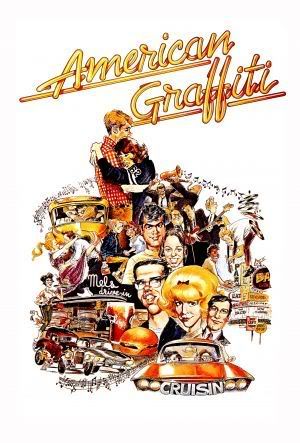
American Graffiti (1973, George Lucas)

The first time I saw "American Graffiti" I dismissed it as visually striking but empty. Several viewings later I have come to appreciate it as Lucas' masterpiece and one of the best films of the 1970's, a film with a real sense of maturity and understanding of this phase in life, and one which features so many colorful and interesting characters who all feel real or relevant even today. "American Graffiti" is so much more than just a nostalgia piece, and remains far, far superior to the many movies it inspired, which ARE empty and lack the substance and strength of character this had. Even the acclaimed ones like "Dazed and Confused" are exposed for what they really are when compared to this film.

Haskell Wexler is credited as a visual consultant on this film, and given that I cannot find any information on the credited cinematographers (who are only credited on one other film) I must assume that he had a lot to do with how this film looks, as it does seem very much like his work. It really is absolutely gorgeous, and given how hard it must have been to light the sets where the film was shot, completely on location, quite a remarkable aesthetic achievement. It's stylized, but not in a manner that makes the film look improbable or unrealistic, and it is one of few American films from the 1970's which consistently looks beautiful, where one can pause the film at any point and find an evocative or beautiful image.

George Lucas was still a good director at this point, of course, and he tells this story remarkably well. I don't think there's anything here that I would have done differently, and it is almost unquestionably his finest achievement as director. Even when you take away all the great shots in this film there's still a rich and well-told story. There have been numerous films like this, chronicling the experiences of a group of seniors just after or just before the end of high school, but none even begins to approach how perceptive and intelligent "American Graffiti" is, and how well it captures the emotions many of us felt at that age.

"American Graffiti" is a special film that is unlike any other although it has been copied many times. It is not just great entertainment, it is a film that captures human nature like few others, and one that is as striking on an emotional level as it is on a visual level. A simply outstanding film.

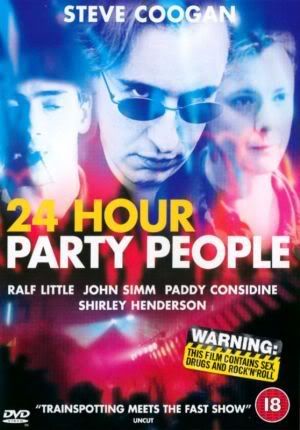
24 Hour Party People (2002, Michael Winterbottom)


It would be unfair to dismiss "24 Hour Party People" as a biographical look at Tony Wilson. It's so much more. It's a celebration of music, of a lifestyle, of a bygone era. It also plays like a Greek tragedy, albeit substantially more fun, but there is no shortage of darkness and tragedy in the film. The shifts in tone are particularly remarkable, as the film veers from its usual dry, sardonic tone into real pathos and examination of the dark side of almost any phenomenal success.

I'm not completely nuts. I'm not going to claim that "24 Hour Party People" is a visual masterpiece, or a film which achieves more with its characters than most accepted 'masterpieces' of cinema when it comes to depth. I'm not going to argue that it feels as complete an artistic achievement as one of the better films by a cinematic 'master'. Wait, what am I talking about? That's exactly what I'm going to argue. "24 Hour Party People" is as perfect as a film can get, not because it achieves the visual perfection of one of Kubrick's finer films, not because it marks a turning point in cinema history, but because it sets out to be exactly what it ends up being- a hilarious, darkly satirical and yet affectionate look at one of the biggest 'scenes' in music history, some of the best bands, and the man behind it all, Tony Wilson. A minor player in his own life story. This is one of the most purely enjoyable films ever made.

It all unfolds with a sort of inspired madness. The very first scene shows the charismatic, arrogant, and somewhat self-important Tony Wilson hang-gliding for a television report, then turning to the camera after that's over with and saying "You're going to see a lot more of that sort of thing in the film. I don't want to say too much, don't want to spoil it. I'll just say one word: 'Icarus'. If you get it, great. If you don't, that's fine too. But you should probably read more." It's not only a terrific line, indicative of the sort of dry wit much of the dialogue achieves, but also telling of what the film is going to be like. J.R. Jones of the Chicago Reader was one of the less infatuated major critics with the film (but still gave it a definitely positive review, which should give you some indication of just how well-received this film was by critics), and labeled Coogan's Wilson a a pedantic narrator, describing his story as having little narrative momentum of its own. I like to think that's sort of the point, and Wilson himself makes a point to mention in the film that it's not a film about him.

The highlight of the film, arguably even more than Frank Cottrell Boyce's screenplay, is Steve Coogan as Tony Wilson. As everyone reading this probably knows, Coogan based his famed Alan Partridge character on Tony Wilson's career as a television reporter, so he's really playing a variation on Alan Partridge here. What's amazing about Coogan's performance is that he manages to draw even this Partridge fan into Tony Wilson's world so much that I didn't care about any similarity. It's still a stunning comic performance, and excellent during the darker, more serious scenes in the film as well. I'd go as far as saying that it's one of the best male performances of the decade. The rest of the cast is too large to go through one by one, but everyone is excellent here, some going for a sort of slightly altered impersonation of the real-life person they're playing, some creating their own version.

A point of criticism often aimed at "24 Hour Party People" is inaccuracy. The film is gleefully inaccurate, and I fail to see how that's a problem. We didn't need a pedantic, touch-on-all-bases film about Factory Records, because Factory Records would never have made such a movie had they ventured into film production. This is exactly the sort of loose-knit and yet tightly-written film that is needed to capture the energy of the music and the movement. Boyce's screenplay goes through dozens of characters, none of which don't feel real, it's got enough pompous and arrogant philosophizing to turn off even the worst pseudo-intellectual, but it makes it work simply because it's got a sort of self-mocking sense of humor. The points Wilson makes by referencing history and philosophy are valid, but it would be at odds with the sort of film this is if they weren't written with the wry wit the rest of the film is, and if they weren't delivered so wonderfully by Coogan. The film is shot on video, and uses a hand-held style which far from inhibiting the film as it arguably does with some other Winterbottom films, just suits it perfectly. That doesn't mean there aren't some scenes which are explosively extravagant visually, because there are, and they are beautiful.

"24 Hour Party People" feels like a complete artistic achievement. It captures the energy of the music, the feel of it, the basis for the movement so well, but also succeeds at providing a well-told summary of the story of Factory Records, the Hacienda, and Tony Wilson. As far as I'm concerned it's one of the most enjoyable films ever made, and one of the most consistently successful. I don't think there's anything here that falls flat, it's all quite brilliant, from the first scene to the final shot.

Monday, November 5, 2007

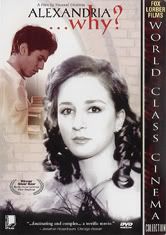
Alexandria... Why? (1978, Youssef Chahine)


For a director who has been making movies for nearly 60 years, Youssef Chahine is still criminally unknown outside of Arabia and Europe, even in critical circles. The widest release outside of Europe for any of his films was 200 screens in the US for 1997's "Destiny", and only five or six of his films are available on Region 1 DVD. Still, dedicated cinephiles who have studied world cinema will inform you that Chahine is considered one of world cinema's great masters. He has been nominated for no less than seven awards at Cannes, five of them either for the Palme D'Or or its predecessor, the Grand Prize. Chahine won a Lifetime Achievement Award in 1997 at Cannes, as well. He has been awarded numerous other awards over the course of his illustrious career and has made some of the best regarded works in Arabic (specifically Egyptian) cinema. So why hasn't he achieved recognition across the Atlantic? His films are dense, rich, colorful, articulate, controversial, and endlessly fascinating, but they are also difficult. Few Chahine films can be watched and fully understood in one sitting, and even fewer are fully enjoyed on first viewing. Occasionally Chahine's films fall prey to his complex plots and multiple layering, and though it is still a good film, "Alexandria… Why?" is one of his most difficult and muddled films.

The film, set during World War II tells multiple stories, one being Chahine's own story through the character of Yehia (played excellently by Mohsin Mohieddene), a young man in Egypt with directorial ambitions but the passion to be an actor, who frequently watches the same film repeatedly at his local cinema out of fear that he missed something the first time, performs Shakespeare, struggles with social and familial pressures, falls in love, and pursues his dream of studying acting at the Pasadena Playhouse. This is the film's main story, but subplots include a Jewish-Muslim romance where the female character is pregnant, a homosexual romance between an English soldier and a wealthy Arab, and a wacky, often funny plot featuring a group of communists who plan to kidnap Winston Churchill in hopes of ending the war.

Though certainly not Chahine's first controversial film (his masterpiece "Cairo Station" was banned for twelve years in Egypt after its first run of screenings in 1958, and understandably so, being a film about a sexually frustrated, handicapped fetishist), "Alexandria… Why?" created quite the furor in conservative Islamic Egypt upon first release, it made bold statements on global politics, suggested (truthfully) corruption in Egypt's political structure, supported communism, and featured a homosexual relationship between a British soldier and a wealthy Arab, among other taboos. Chahine designed his script not only to tell the story of himself as a young man, but to tell his story as part of a bigger one, the story of the social and political climate in Alexandria, and the story of what he clearly believes to be incorrectly considered social taboos come to life. This is a brave and challenging film which affected me more than most films I've seen recently, all the more surprising since I thought it was a lacking effort from a director whose films are generally quite brilliant.

The words 'stock footage' have negative connotations in any film fan's mind because it is so often used ineptly, but here the stock footage of WWII used brings the war to life at an appropriate distance and is edited cleverly and realistically into the film, so we never feel that we are watching a cheap production. That said, the overall production design on this fairly low-budget film is minimal, but when the film does look expensive in about three or four scenes, the money is used well. Unfortunately Chahine makes some unfortunate mistakes like using footage from "An American in Paris" when that film was released several years after the Second World War ended. The photography is on occasion sloppy, but more than often it is precise and adds a lot to the mood of the film. There is not much of an original score used in the film as Chahine prefers to use a variety of music clips from various sources to suit whatever point the film is at. The music works perfectly with the film, but it so varied I cannot imagine it would make good listening as an album.

Ultimately it is the film's occasional sloppiness that lets it down, as well as Chahine's tendency for complex plotting. This would have been perfect as a two hour film about Chahine as portrayed through the character Yehia, but his desire to comment on more than himself brings the film's quality down. Its script is excessive and often incoherent, and although there are some exceptionally shot scenes like that in which Yehia directs his first theatrical performance, the film on a whole is more remarkable for its ambition, scale, viewpoint, and characters than the end product. It is muddled and messy at times, worth watching but certainly not Chahine's best as sometimes named by critics. Chahine's later films in his autobiographical trilogy, "Egyptian Story" and "Alexandria Again and Forever" are better ways to appreciate Chahine's cinema and the character Yehia, as is his very best, most original, and bravest film "Cairo Station", which I honestly consider one of the great masterpieces of cinema.